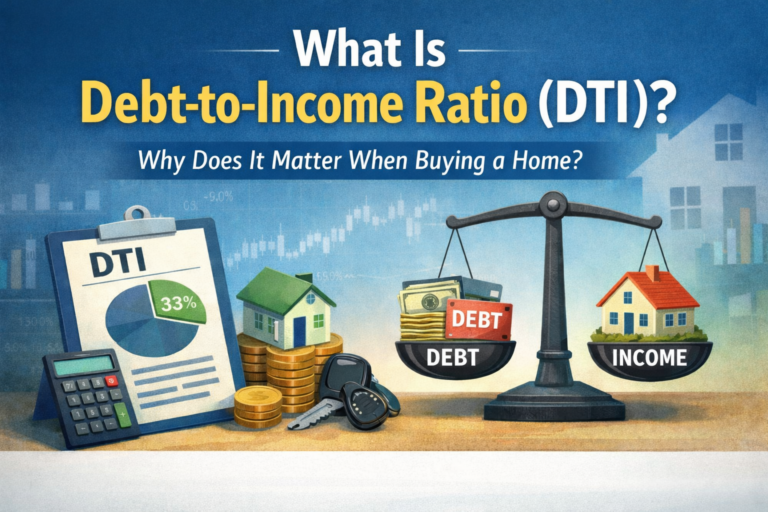
If you’re planning to buy a home, one of the first things a lender will look at is how much of your income is already committed to debt. This is called your debt-to-income ratio, or DTI, and it plays a major role in determining the type and size of mortgage you can qualify for.
Your DTI compares the total of your monthly debt payments—things like car loans, student loans, minimum credit card payments, and your projected mortgage payment—to your gross monthly income, which is what you earn before taxes. This percentage helps lenders understand whether you can comfortably take on a new mortgage in addition to your existing obligations.
For instance, let’s say you earn $5,000 per month and your total monthly debts, including your estimated mortgage payment, add up to $1,500. Your DTI would be 30%. Most lenders look for DTI ratios below certain limits, which vary based on the type of loan. For a conventional mortgage, many programs aim for a maximum around 43%, while government-backed options like FHA and VA loans may allow higher ratios if you have other strong qualifications such as good credit or extra savings.
A healthy DTI isn’t just about getting approved—it’s about long-term financial comfort. A ratio that’s too high can make it harder to manage your bills and can even affect your ability to build savings or handle unexpected expenses. If your DTI is on the higher side, paying down existing debt, avoiding new loans or large purchases, or considering homes slightly below your maximum price range can make a big difference.
If you’re unsure where you stand, it’s a good idea to review your numbers before starting your home search. Having a clear understanding of your financial picture can make the process smoother, reduce stress, and help you focus on homes that fit comfortably within your budget.
If you want to know where your debt-to-income ratio stands—or how to improve it before buying a home—reach out today. I can help you understand your options so you can move forward with confidence.
This article is for informational purposes only and does not constitute financial or lending advice. Loan approvals and terms are subject to credit review, program guidelines, and other qualifying factors. Contact OneTrust Home Loans for personalized guidance.