If you’ve ever talked with a lender or started the home loan process, you’ve probably heard the phrase “locking your rate.” It sounds simple—but it’s one of the most important decisions you’ll make during a home purchase or refinance.
A rate lock can protect you from rising interest rates, but it also comes with timing considerations that matter more than most people realize.
What Is a Mortgage Rate Lock?
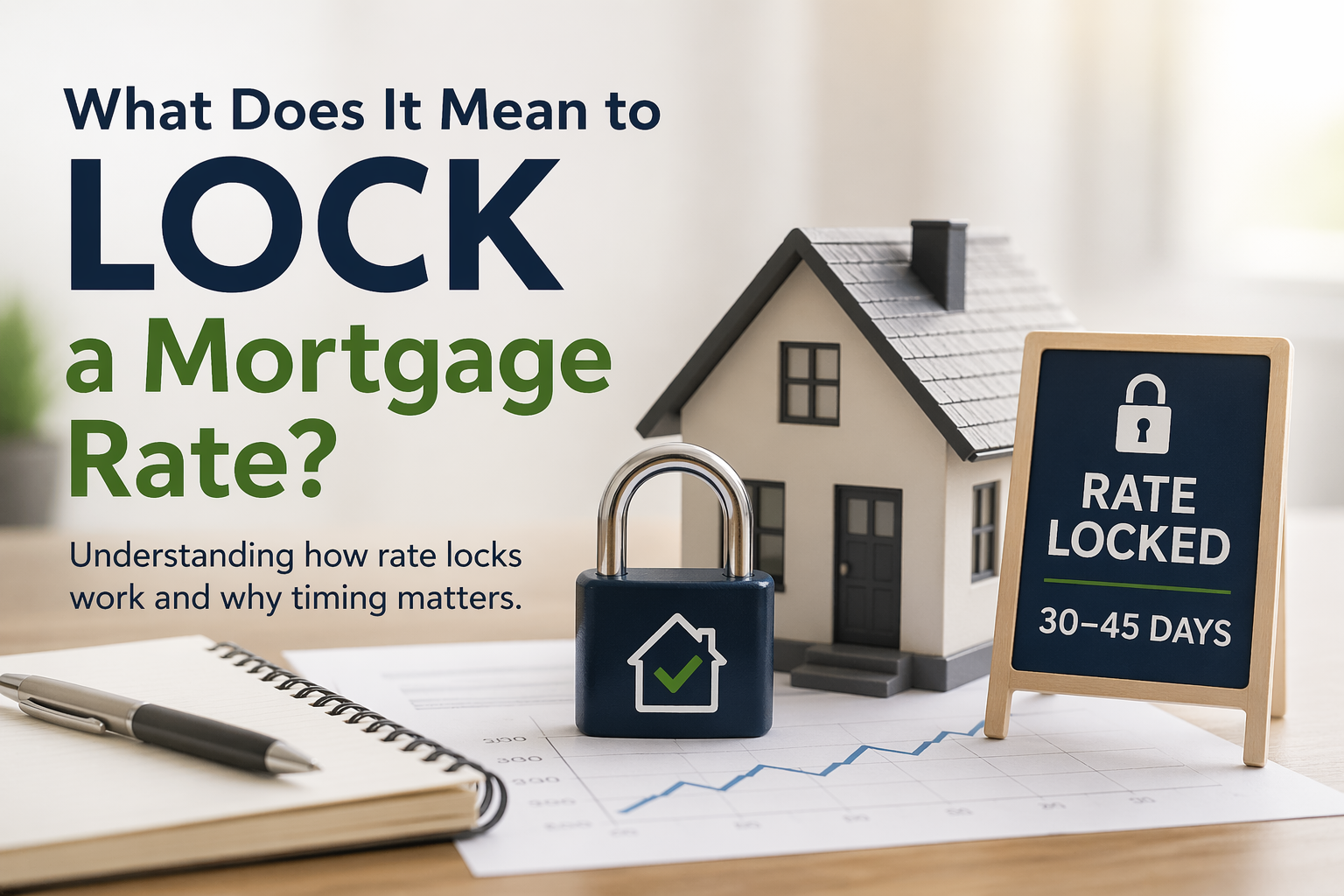
A mortgage rate lock is an agreement between you and your lender that secures your interest rate for a specific period of time.
Lock periods typically range from 30 to 45 days, depending on the contract timeline and how the transaction is progressing. The right lock period will vary based on your specific situation.
During that lock period, your interest rate will not change, even if market rates go up.
That’s the key benefit: stability.
Because mortgage rates move daily (sometimes multiple times per day), locking your rate removes uncertainty and allows you to move forward knowing exactly what your payment will look like.
How a Rate Lock Works in Practice
Once you’re under contract on a home—or in some cases, even slightly before—you’ll have the option to lock your rate.
When you lock:
- Your interest rate is set
- Your monthly principal and interest payment becomes predictable
- Your loan pricing is tied to that specific rate
From that point forward, even if rates increase, you’re protected.
However, if rates improve after you lock, you typically won’t automatically benefit from the change. Some loan programs may offer options to adjust if rates improve significantly, but availability varies. Ask your lender!
Why Timing Matters More Than People Think
This is where many buyers get tripped up.
A rate lock isn’t just about if you lock—it’s about when you lock.
Lock too early, and you may risk needing an extension if your closing gets delayed.
Lock too late, and you could be exposed to market volatility.
Mortgage rates are influenced by things like inflation data, economic reports, and Federal Reserve policy. Those factors can cause noticeable swings in a short period of time.
Because of that, the right time to lock is not a guess—it should be a strategy.
How Long Should You Lock Your Rate?
Your lock period should match your expected timeline to closing.
In most standard purchase transactions, a 30-45 day lock tends to align well with typical contract timelines, and provides a reasonable buffer for normal processing. However, The right choice will depend on the specifics of your transaction.
Shorter locks can work in very fast transactions, and longer locks may be necessary in more complex situations—but those are the exception, not the rule.
Choosing the right lock period matters because extending a lock can come with additional cost.
A good loan officer will help you align your lock with your contract timeline so you’re not paying for time you don’t need—or running out of time unexpectedly.
Can You Change Your Rate After Locking?
In most cases, once your rate is locked, it’s locked.
There are a couple of exceptions:
- Some lenders offer a float-down option if rates improve
- You may be able to re-lock, but that often comes with added cost or revised terms
This is why it’s important to make a thoughtful decision up front rather than trying to “time the market.”
Locking vs. Floating: What’s the Difference?
When you “float” your rate, you’re choosing not to lock yet. That means your rate will continue to move with the market.
Floating can work in your favor if rates improve—but it also carries risk if they rise.
Locking, on the other hand, prioritizes certainty over speculation. For clients who are not comfortable with the ups and downs of the market, locking is often the safer choice.
At some point, it makes sense to lock at a rate you’re comfortable with—even if rates might improve slightly later. Trying to catch the absolute lowest rate can feel appealing, but it also means staying exposed to the risk of rates moving the wrong direction.
For most homebuyers—especially those working within a budget—certainty and stability tend to outweigh trying to time the market perfectly.
Why I Focus on Strategy, Not Guesswork
This is one of the reasons I emphasize full pre-approvals instead of quick pre-qualifications.
When you’re fully pre-approved, we’ve already reviewed your income, credit, and documentation. That allows us to move quickly and confidently when it’s time to lock your rate.
It also gives us the ability to build a plan around your timeline instead of reacting under pressure.
Locking your rate shouldn’t feel like a gamble—it should feel like a step forward.
If you’re thinking about buying a home or just want to understand how timing your rate lock fits into the bigger picture, I’m always happy to help walk through it with you. Every situation is a little different, and having a clear plan can make a big difference. Feel free to reach out anytime through my website—I’d be glad to help you map out your next steps.