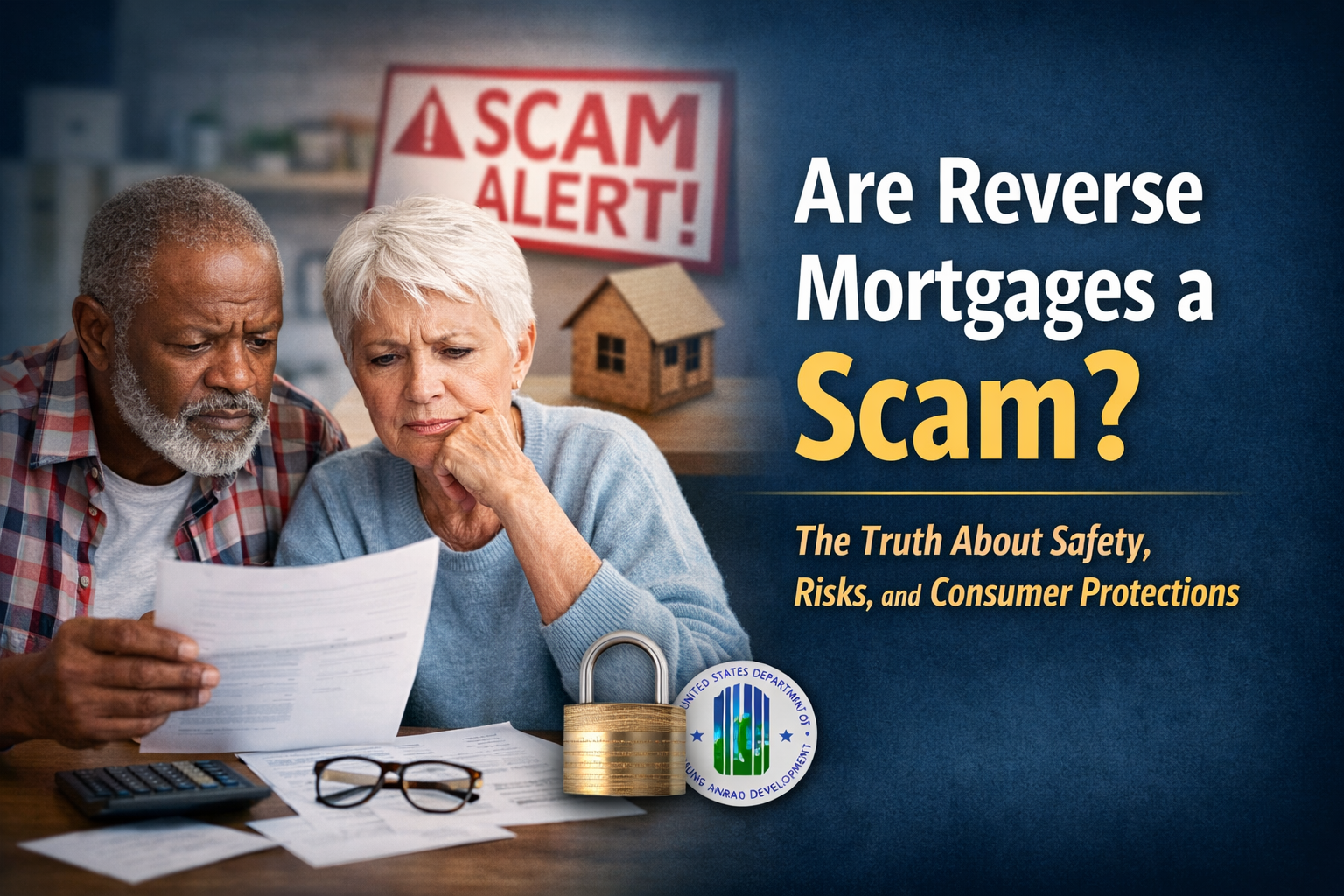
“Are reverse mortgages a scam?”
It’s one of the most common questions I hear. And honestly, I understand why people ask it. When you’re talking about your home — often your largest asset — caution is healthy.
The short answer is no, reverse mortgages are not a scam. But they are widely misunderstood. And misunderstanding tends to create fear.
Let’s walk through it carefully.
Why the Reputation?
Some of the skepticism comes from outdated information. Reverse mortgages today are not structured the way they were decades ago. Regulations have tightened, underwriting standards have improved, and consumer protections have increased significantly.
The most common reverse mortgage today is the federally insured Home Equity Conversion Mortgage (HECM). It is regulated and comes with built-in safeguards designed specifically to protect older homeowners.
That’s very different from a “too good to be true” scheme.
Do You Give the Bank Your House?
No.
With a reverse mortgage, you remain the owner of your home. Your name stays on title. The lender places a lien on the property — just like with a traditional forward mortgage.
You are still responsible for:
- Living in the home as your primary residence
- Paying property taxes
- Maintaining homeowners insurance
- Keeping the home in reasonable condition
If those obligations are not met, the loan can become due. That’s not unique to reverse mortgages — that’s true of traditional mortgages as well.
Ownership does not transfer to the lender simply because you obtained a reverse mortgage.
What Happens When the Homeowner Passes Away?
This is where myths tend to grow.
When the last borrower permanently leaves the home (whether due to moving, long-term care, or passing away), the loan becomes due. At that point, heirs typically have several options:
- Sell the home and keep any remaining equity after the loan is paid
- Refinance the home and keep it
- Purchase the home for 95% of the current appraised value, even if the loan balance is higher
- Walk away if the home is worth less than the loan balance
That 95% option is critical. Reverse mortgages are non-recourse loans. That means neither the borrower nor the heirs will owe more than the home is worth at the time of repayment, assuming loan terms were followed.
If the balance exceeds the home’s value, heirs can satisfy the loan at 95% of the appraised value. FHA insurance covers the difference.
That’s a built-in consumer protection.
Where Problems Can Occur
Reverse mortgages can feel like a bad experience if:
- The borrower didn’t fully understand the obligations
- Property taxes or insurance were not maintained
- The homeowner planned to move shortly after taking the loan
- It simply wasn’t the right fit for their goals
That doesn’t make the product a scam. It means it must be evaluated carefully.
And this is exactly where another important consumer protection comes into play.
Required Independent Counseling
Before a borrower can move forward with a federally insured HECM reverse mortgage, they must complete a third-party counseling session with a HUD-approved counselor.
This counselor does not work for the lender. They are independent. They are not paid on commission. Their job is strictly to educate and ensure understanding.
During counseling, borrowers review:
- How the loan works
- The costs and fees
- Their ongoing responsibilities
- When the loan becomes due
- Possible alternatives
The goal is simple: make sure the homeowner understands what they’re signing and how it fits into their overall financial picture.
After the session, the borrower receives a counseling certificate. Without that certificate, the loan cannot proceed.
Scam products do not require independent education before application. Reverse mortgages do. That requirement alone has prevented many misunderstandings and helps ensure borrowers are making informed decisions.
The Better Question
Instead of asking, “Is it a scam?” the better question is:
“Does this make sense for my long-term financial plan?”
Reverse mortgages are generally designed for homeowners age 62 and older who want to access a portion of their home equity without making required monthly mortgage payments. For some retirees, that flexibility can improve cash flow and financial stability. For others, it may not be appropriate.
The key is suitability.
As a Mortgage Loan Originator with OneTrust Home Loans, my role isn’t to convince anyone to move forward. My responsibility is to educate, explain the pros and cons clearly, and help determine whether a reverse mortgage fits your situation.
If you’re 62 or older and have questions, I’d rather you get clear, accurate information than rely on internet rumors. Even if you decide it’s not right for you, at least you’ll know why.
If you’d like to talk through your specific situation, I’m always happy to have that conversation.
Reverse Mortgage Disclosure
For more information on Reverse Mortgages, visit:
https://onetrusthomeloans.com/reversemortgage-disclosures/
The borrower must meet all loan obligations, including living in the property as the principal residence and paying property charges, including property taxes, fees, hazard insurance. The borrower must maintain the home. If the homeowner does not meet these loan obligations, then the loan will need to be repaid. This is not tax advice. Consult a tax professional. These materials are not from HUD or FHA and were not approved by HUD or a government agency. This is an Advertisement. All products are not available in all states. All options are not available on all programs. All programs are subject to borrower and property qualifications. Rates, terms and conditions are subject to change without notice. For more information on Reverse Mortgages, visit:
https://onetrusthomeloans.com/reversemortgage-disclosures/