If you’ve ever thought buying a home required a large down payment, a USDA loan might surprise you.
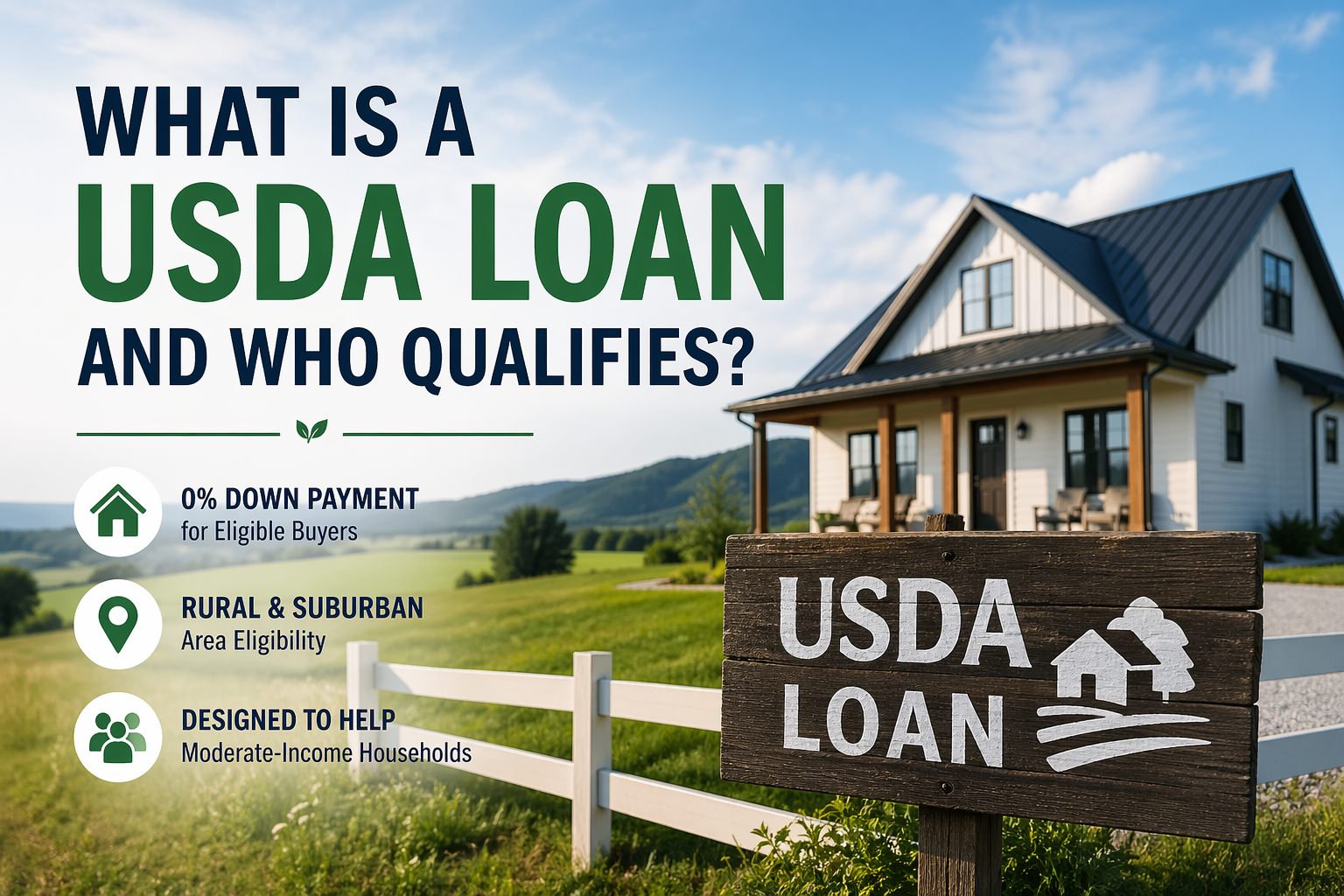
A USDA loan is a government-backed mortgage designed to help people buy homes in eligible rural and suburban areas. It’s part of a program from the U.S. Department of Agriculture aimed at promoting homeownership outside major metro areas.
And here’s what draws many buyers to this program—eligible borrowers may be able to purchase a home with little to no down payment, depending on their qualifications and the specifics of the loan.
That doesn’t automatically make it the right fit for everyone, but for an eligible buyer who meets the program’s requirements, it can be one of the more affordable paths to home ownership.
How a USDA Loan Works
USDA loans are issued by approved lenders but backed by the government. Because of that backing, lenders can often offer more flexibility in how a loan is structured compared to many conventional options.
These loans are meant for primary residences only, not second homes or investment properties. The goal is to help individuals and families secure stable housing in eligible areas.
And while “rural” might sound limiting, many qualifying areas are just outside growing cities—places people are often already considering.
Key Benefits of a USDA Loan
One of the most notable potential benefits is the ability to purchase a home with little to no down payment for eligible borrowers. For many buyers, coming up with upfront funds is one of the biggest hurdles. This program is designed to help address that for those who qualify.
USDA loans may offer favorable interest rates and mortgage insurance structures for eligible borrowers. Your specific terms will depend on your financial profile and current market conditions.
Who Qualifies for a USDA Loan?
USDA eligibility is based on more than just where the home is located. There are a few key factors lenders look at.
Location Eligibility
The property must be in a USDA-approved area. Many parts of Montana—including areas around Bozeman—can qualify depending on the exact location.
Income Limits
These loans are designed for moderate-income households. Limits vary based on household size and county, and they consider total household income, not just the borrower’s income.
Primary Residence Requirement
You must plan to live in the home. USDA loans are not designed for rentals or vacation properties.
Credit and Financial Profile
USDA loans can be more flexible than conventional loans in some areas, but they are often more conservative when it comes to debt-to-income (DTI) ratios. Lenders will look closely at your credit history, income stability, and how much of your monthly income is already committed to other debts.
So while the program helps reduce upfront costs, it still requires a solid overall financial picture—especially when it comes to managing monthly obligations.
Is a USDA Loan Right for You?
A USDA loan can be a strong option if you’re trying to keep upfront costs low and you’re open to homes outside major city centers.
That said, it’s not always the best fit. Income limits, location restrictions, and your overall financial goals all play a role. In some cases, another loan program may give you more flexibility or better long-term benefits.
This is where it helps to look at the full picture rather than just one feature like “zero down.”
If you’re wondering whether a USDA loan fits your situation, I’m happy to walk through it with you. No pressure, no sales pitch—just a straightforward conversation to see what options make the most sense. You can reach out through my contact page at themortgageminute.org and we’ll take it from there.
All products are not available in all states. All options are not available on all
programs. All programs are subject to borrower and property qualifications. Rates, terms and conditions are subject to change without notice.