When people first hear about reverse mortgages, one of the most common questions is simple: “How much can I actually get?”
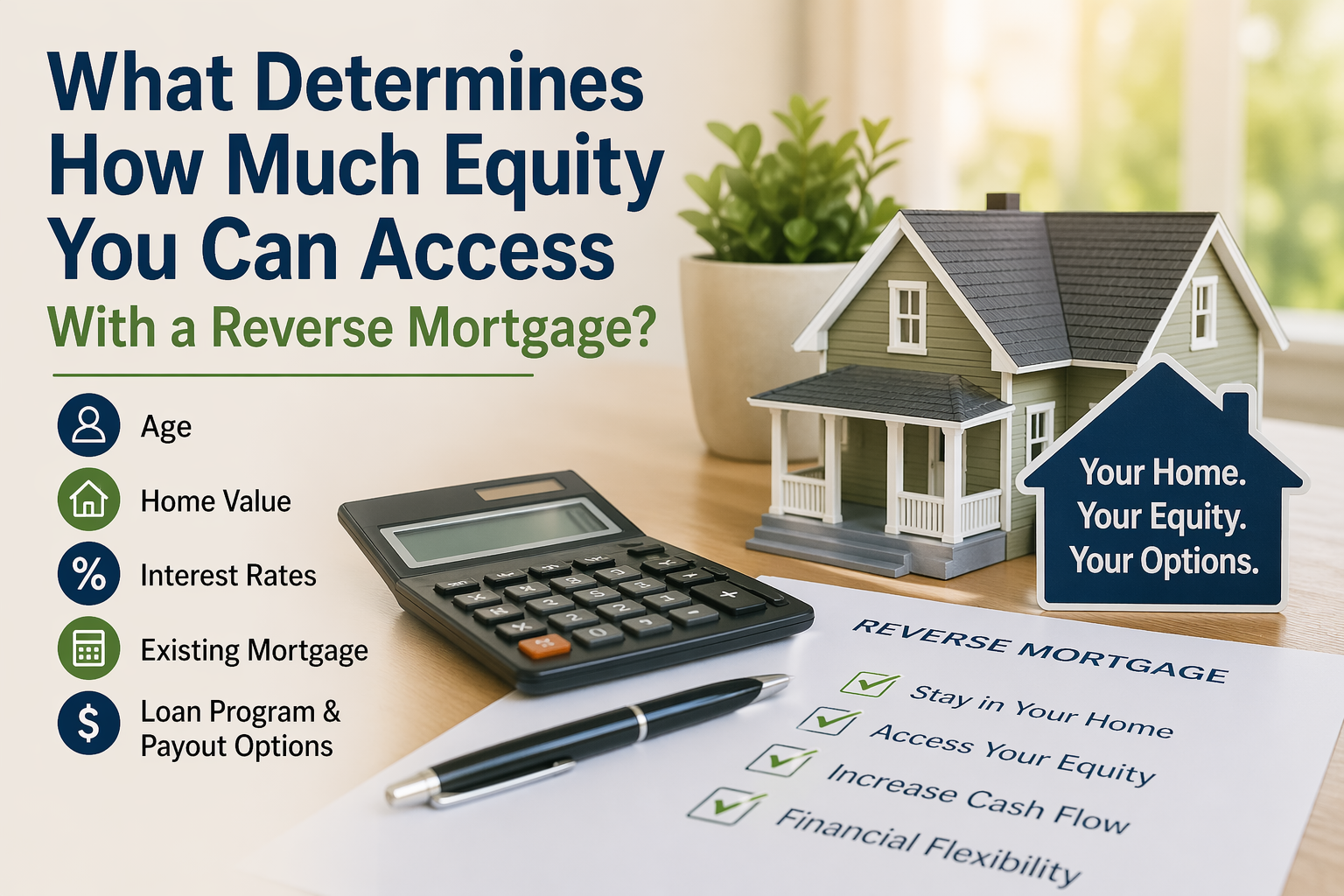
The answer isn’t one-size-fits-all. The amount of equity you can access through a reverse mortgage depends on a handful of key factors, all working together to determine your available proceeds. Understanding these can help set realistic expectations and avoid surprises.
Age Plays a Bigger Role Than Most People Expect
With a reverse mortgage, age isn’t just a number—it’s a major part of the calculation. Age is one of several factors used in determining available proceeds under a reverse mortgage program. Generally speaking, program guidelines factor in the age of the youngest borrower as part of the overall calculation—along with home value, interest rates, and existing mortgage balances. Your loan officer can walk through how these factors apply to your specific situation.
This is because reverse mortgages are designed to be repaid over time, typically when the home is no longer the primary residence. The way reverse mortgage programs are structured, the age of the borrower is one of the inputs used to determine how much equity may be available, along with other key factors.
Your Home’s Value Matters—But There’s a Limit
Your home’s appraised value is another key factor. The more your home is worth, the more potential equity you may have available.
There is a maximum home value that FHA-insured HECM programs will factor into the calculation. This is known as the maximum claim amount, and is set by the Federal Housing Administration, and is subject to periodic adjustment. If your home’s appraised value exceeds that limit, the calculation uses the program maximum rather than the full value.
For higher-value homes, it is worth asking your loan officer whether additional program options may be available that could factor in a higher home value. Availability varies by lender and program, and not all options are available in all states.
Interest Rates Impact Your Available Proceeds
This is one factor that often catches people off guard. Interest rates are another factor in determining a borrower’s available proceeds. Because reverse mortgage loan balances grow over time as interest accrues, the rate environment at the time of the loan plays a role in how the program calculates available equity.
Why? Because the loan balance grows over time based on the interest rate. A higher rate means the lender must be more conservative upfront.
Existing Mortgage Balance Must Be Paid Off
If you currently have a mortgage on your home, that balance doesn’t disappear—it must be paid off using the reverse mortgage proceeds.
That means your net available funds are reduced by whatever is owed. In some cases, borrowers qualify for a reverse mortgage but don’t have much additional cash available after the payoff.
Type of Reverse Mortgage Program
Not all reverse mortgages are structured the same. The most common is the FHA-insured HECM, but there are also proprietary options offered by private lenders.
Each program has its own guidelines, which can affect how much equity you’re able to access. Factors like lending limits, interest structures, and payout options all come into play.
How You Choose to Receive the Funds
While this doesn’t change the maximum you qualify for, it does affect how and when you can access your equity.
Options typically include a lump sum, monthly payments, a line of credit, or a combination. Many borrowers choose a line of credit because it offers flexibility and can grow over time, giving you access to additional funds later if needed.
Putting It All Together
At the end of the day, the amount of equity you can access through a reverse mortgage is based on a combination of your age, your home’s value, current interest rates, any existing mortgage balance, and the program you choose.
It’s not uncommon for two homeowners with similar homes to qualify for very different amounts simply because one factor—like age or interest rate—differs.
If you’re curious what this might look like in your specific situation, I’m always happy to walk through the numbers with you. No pressure—just a straightforward conversation to help you understand your options and decide if it makes sense for you.
Reverse Mortgage Disclosure
The borrower must meet all loan obligations, including living in the property as the principal residence and paying property charges, including property taxes, fees, hazard insurance. The borrower must maintain the home. If the homeowner does not meet these loan obligations, then the loan will need to be repaid. This is not tax advice. Consult a tax professional. These materials are not from HUD or FHA and were not approved by HUD or a government agency. This is an Advertisement. All products are not available in all states. All options are not available on all programs. All programs are subject to borrower and property qualifications. Rates, terms and conditions are subject to change without notice. For more information on Reverse Mortgages, visit: https://onetrusthomeloans.com/reversemortgage-disclosures/