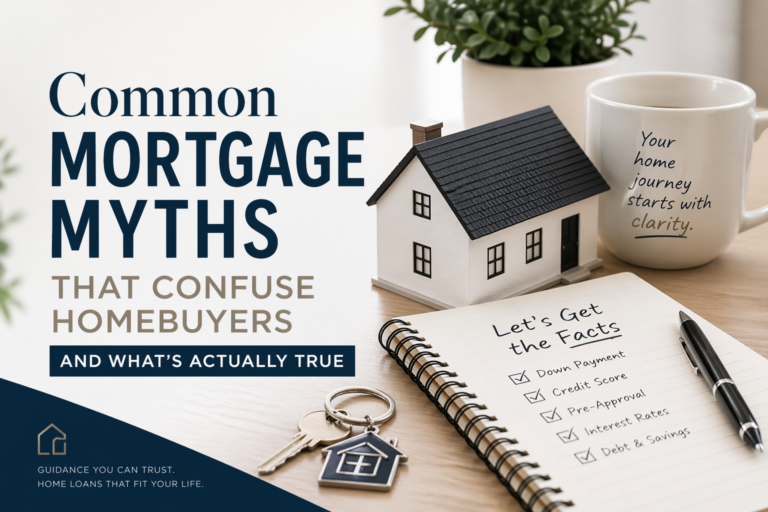
When shopping for a home loan, it’s common to believe the lowest advertised interest rate automatically means you’re getting the best deal. After all, a smaller rate means a smaller payment, right? Not necessarily. This is one of the most common myths about mortgages—and believing it can actually cost you more in the long run.
Why This Myth Falls Apart
Many “too good to be true” rates come with strings attached. To get that shiny, low number, you may have to pay thousands of dollars in discount points upfront, or accept higher closing costs and fees. While your monthly payment may be slightly lower, those upfront costs can take years to break even—sometimes longer than you plan to keep the home.
Even without discount points, some low-rate offers carry higher lender fees or restrictive terms. When you add it all up, the total cost of the loan—the real number that matters—can end up higher than a loan with a slightly higher rate and lower costs.
What Really Matters
The smartest mortgage isn’t just about rate; it’s about total cost. That includes the Annual Percentage Rate (APR), closing costs, any points, and how long you plan to stay in the home. Sometimes, the “lowest” rate isn’t the cheapest option once you consider everything.
At OneTrust Home Loans, my priority is to help you see past the numbers on the page and understand the full picture so you can choose a loan that truly supports your financial goals—not just your monthly payment.
The Bottom Line
Don’t fall for the myth that the lowest rate always equals the best deal. The real goal is to find the loan that saves you the most money overall and fits your plans.
If you’re comparing options and want to know which one actually benefits you most, reach out to me today. I’ll help you break down the details and find the mortgage that truly works in your favor.